What is Stealth Camping?
Stealth camping is the act of sleeping overnight inside your vehicle without others being aware you're doing so. It's not illegal in most places — it's just strategic parking. The goal is simple: find a safe, quiet spot, blend in, and get a good night's sleep without drama.
The right location depends heavily on your vehicle. If you're in a regular car, SUV, or minivan you have a lot of flexibility — you blend in almost anywhere. If you're in something that stands out — a box truck, a shuttle bus, a Sprinter with solar panels and bikes hanging off the back — you'll want to be more selective. That's what this guide is for.
Step 1: Use Google Maps Satellite View
This is my go-to tool and it changes everything. Before I ever arrive in a new city, I pull up Google Maps satellite view and scout my location from my phone or laptop.
Here's the key: commercial areas have large white rooftops. Residential areas have small, darker rooftops packed tightly together. Once you know what to look for you can identify the commercial zone of any city in about 30 seconds.
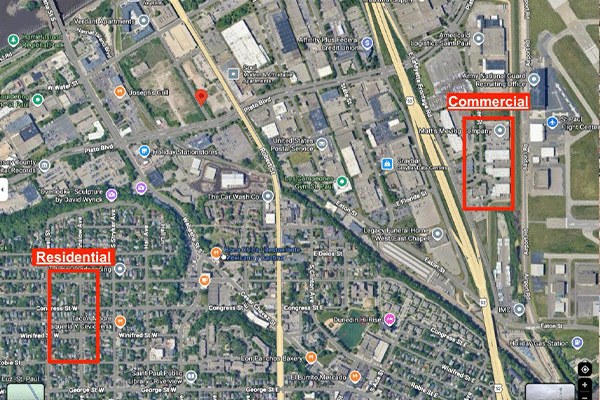
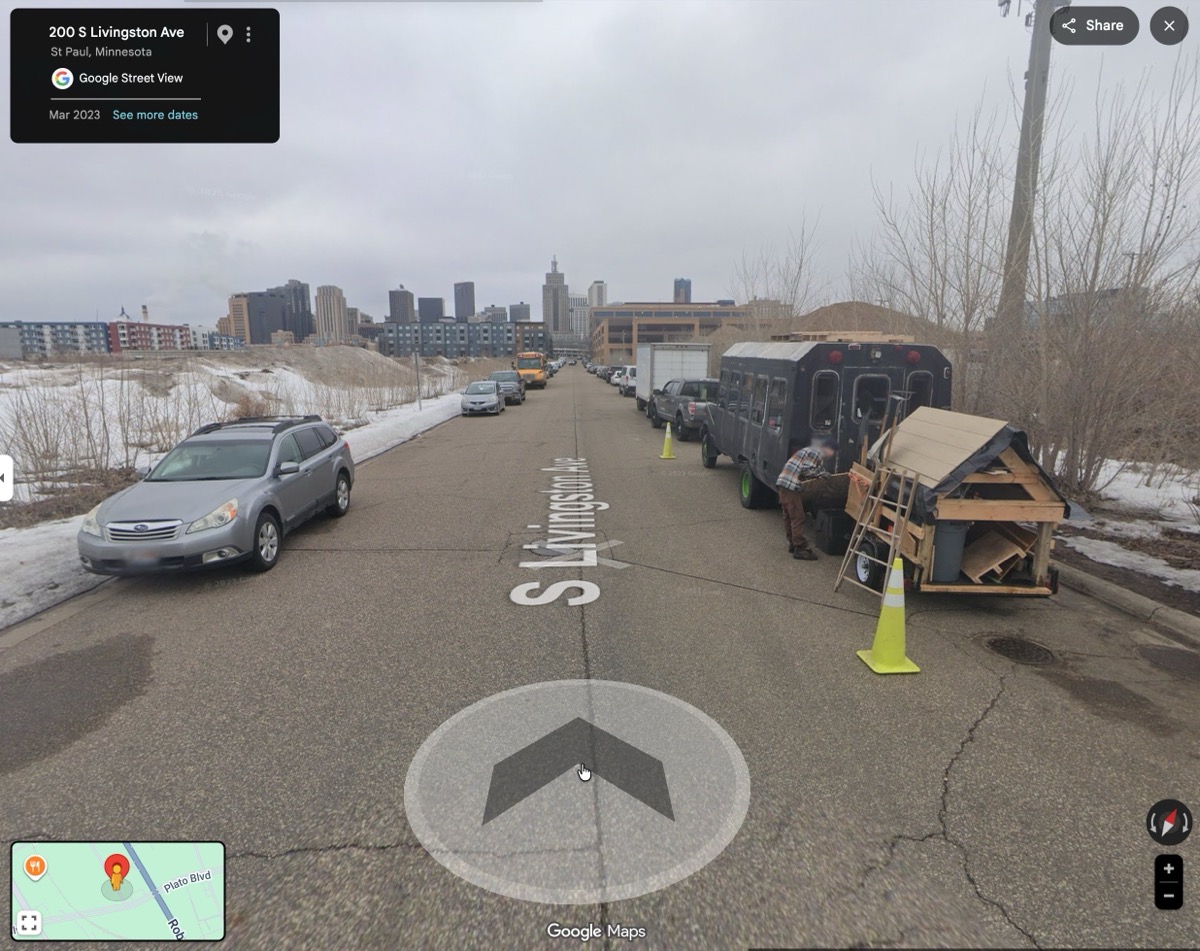
Use the Street View (little yellow person) feature to drop into a street-level view of any location before you show up. You can see exactly what the street looks like, spot other vehicles, check for signs, and decide if it's a good fit — all from your couch.
The 4 Best Location Types
1. Commercial Side Streets
This is my bread and butter, especially if you have a bigger rig. Find the commercial zone of any city using satellite view, then look for a side street — one lane in each direction. Avoid main roads with multiple lanes of traffic. Too loud, too much activity.
What you want to see: other vehicles already parked on the street. Never be the only car on a block. If there are no other cars, there's usually a reason — tickets, restricted parking, or just an area where it's unusual. Plenty of parked vehicles means you blend right in.
2. Near Automotive Businesses
One of my favorite tricks for parking closer to the city center. Auto repair shops, body shops, and dealerships always have random vehicles sitting in their lots and on surrounding streets. Cars get dropped off at night constantly. Nobody blinks at a vehicle parked near a Firestone or a body shop — cops included. It's completely normal. Arrive after they close, leave before they open.
3. Hotel Adjacent Parking
This one is underrated. Find a strip with a hotel and other businesses nearby. Park in the shared parking lot on the non-hotel side — near the furniture store, the restaurant, the other business. Anyone driving by sees a vehicle parked close to a hotel and the logical assumption is that person is a guest. Nobody questions it. Don't park directly in front of the main entrance — that's where the hotel keeps an eye — but the adjacent lot is fair game.
4. Residential (Use Carefully)
I don't personally prefer residential and here's why: homeowners know their neighborhood. They notice what's normal and what isn't. A large van or box truck that wasn't there yesterday gets noticed. That said, if you're in a regular car or SUV, residential is totally fine — it's completely reasonable that you're visiting a friend.
If you do go residential: don't park directly in front of someone's house. Look for spots between houses, near apartment buildings, or on the side of the street that faces a parking lot, open lot, or business instead of a home. And always read the signs.
Don't park next to a homeless encampment. It signals that parking enforcement is lax in that area, which might seem like a green light — but the area can be unpredictable. Move a few blocks away and you'll likely still be in a low-enforcement zone with none of the drama.
Always Read the Signs
Most "no parking" signs have time restrictions. "No Parking 9am–11am Tuesdays" for street cleaning means you can park there Sunday night through Monday morning no problem. Read carefully. A lot of people skip spots that are actually totally fine because they see a sign and don't read the details.
My rule: ask for forgiveness, not permission. If there's no sign that says no parking for the current day and time — park there. Don't ask police where it's okay to park. They're not going to help you live in your vehicle. They want you paying rent or staying in hotels.
Quick Tips for a Successful Night
- 01Scout ahead. Pick your spot on Google Maps before you arrive. Have your route planned so you pull in with confidence and don't fumble around.
- 02Arrive late, leave early. Get there after dark. Leave by 7–9am. You don't need to be up before sunrise but don't linger.
- 03Move from front to back immediately. Park, kill the lights, kill the engine. Move to the back without going outside if you can. Don't hang around in the driver's seat with interior lights on.
- 04Window coverings are non-negotiable. No light should be visible from outside. Keep it simple inside.
- 05Don't cook outside. Don't open your rear doors and dig through storage at the parking spot. Save all of that for a parking lot or rest stop during the day.
- 06Never stay in the same spot two nights in a row. Rotate through 3–4 spots in the same area. Come back after a couple nights. Repetition is what gets you noticed.
- 07You don't have to answer the knock. If police knock, you are not obligated to respond. They don't know you're in there until you answer. I've had this happen — stayed quiet, they inspected the vehicle, moved on, and I slept the whole night without a single ticket.
The Bottom Line
Stealth camping in cities is way more accessible than people think. With Google Maps satellite view and a few principles, you can find a safe spot in virtually any city in under 10 minutes. I've been doing this for 7 years in some of the most densely populated cities in the country and it works.
The key is to be low-key, move regularly, read the signs, and park with confidence. You belong there just as much as anyone else.
Watch the Full Video
See the Google Maps technique in action as I scout stealth camping spots in real cities on the fly.
You've Got the Spot — Now Get the Rig
Browse Brad's personally curated listings of built-out vans, box trucks, and skoolies ready for life on the road.
Browse Rigs for Sale → Find a Builder